
The foundation of successful university communication is academic vocabulary. It enables you to deeply engage with your subjects and articulate complicated thoughts with precision. It would be difficult to understand journals, take part in seminar discussions with any confidence, and write effective assignments without it. Gaining proficiency in academic language is like to getting a key that opens up a world of information and intellectual discussion.

Additionally, academic vocabulary also improves analytical and critical thinking abilities. It facilitates your ability to effectively and clearly express their ideas and deconstruct difficult subjects. University students who possess a solid academic vocabulary are able to formulate well-organized arguments, participate in more meaningful conversations, and pose perceptive inquiries. Consequently, this enhances self-assurance which, in turn, helps your academic writing.
Also, don’t forget that academic vocabulary can also help in a range of different professions. Indeed, the capacity to comprehend and create complicated texts is necessary for many jobs. As well as this, being able to speak successfully in professional settings can be demonstrated by having a solid command of academic language, which can increase employability.
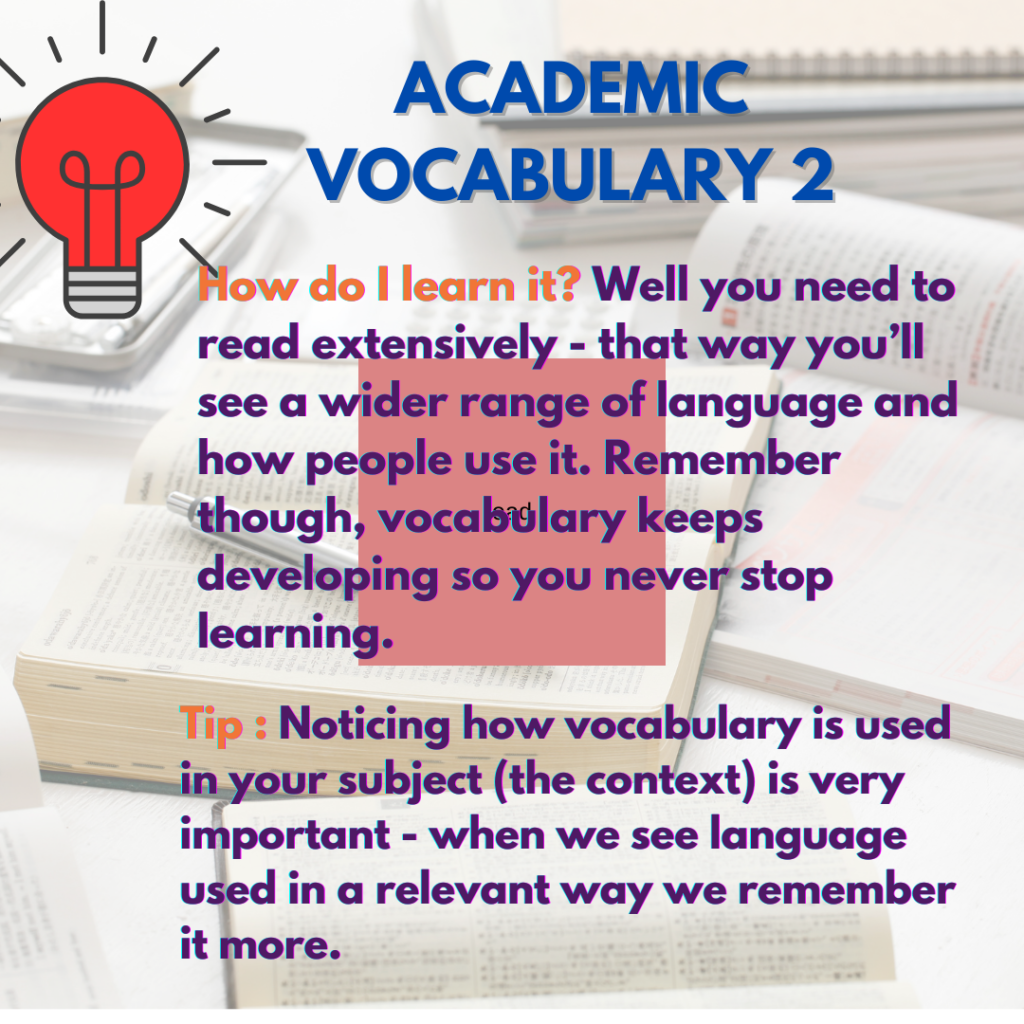
The main way to increase your vocabulary in essays and dissertations is by reading more widely. This is because, by doing so you are exposed to complex linguistic structures and specific terminology through reading articles and other texts in your subject. It’s also helpful to keep a vocabulary book (or Word doc) to list and go over new terms, which you can use to check how much you remember. Then, by focussing on the new language, your understanding will be strengthened when these words are used in your assignments.
Neilproofs (@neilproofs) • Instagram photos and videos